
Basmati rice is world-famous for its long grains, unique fragrance and delicate texture. However, when to shop for Basmati rice you may even see particularly various labels together with Sella (Parboiled), Steam and Raw labelled on the bag. Although they originate from the same premium quality paddy, post-harvest processing transforms their cooking properties, texture, and application in eating. Picking the best variety of Basmati rice can be the difference between a mushy meal and a culinary art piece.
Sella vs. Steam vs. Raw
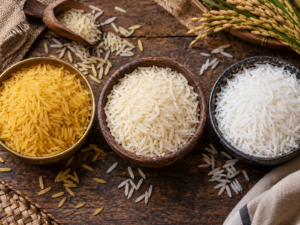
Understanding Raw Basmati Rice
Basmati rice is one among those kinds of rices processed to a low-level post harvesting stage. The rice is dried, hulled to separate the external Chaff, and subsequently matured – habitually for up to a year or significantly more – to diffuse its common aroma and taste.
Key Characteristics:
- Aroma and Flavour: Not comparable, very aromatic floral and nutty notes.
- Texture: Light, fluffy, and soft after cooking.
- Ideal food pairing: Day-to-Day preparation, Classic Pilaffs, Plain Steamed Rice & Light Sides – Where the Natural Aroma Stands Out.
- Raw Basmati is a very delicate type of rice making it flavour when cooked by specific ratios of water and gentle process to avoid any cracking of the grains.
What is Steam Basmati Rice?
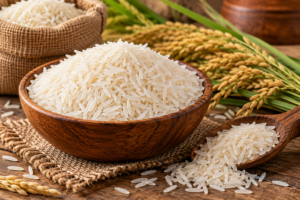
Steam Basmati rice is processed in such a way that the paddy is steamed before it gets husked. This thermal process does not cook the grain but rather instils a tightness in the starch structure.
Key Characteristics:
The grains become firmer and stay extra-long when cooked (as compared to regular Basmati).
- Colour: Clean, shining white than Raw or Sella rice.
- Very good to use for: Pulao, fried rice, restaurant-style rice preparations and catering events where the grains must be different coloured and not sticky.
The other one is Steam Basmati which contains both the fragrance of raw rice and a degree of cooking tolerance as the end product does not cook but become sticky.
Sella (Parboiled) Basmati Rice: What is it?
Sella Basmati rice is the best basmati rice that has undergone a mild parboiling process where raw grain is first soaked, then steamed in its husk before drying and milled. This process pushes nutrients from the outer husk into the endosperm, providing Sella rice a distinctive off yellow-darkish shade.
Key Characteristics:
- Durability: Against all odds, very durable grains that don’t mush or fall apart, even if overcooked a bit.
- Nutrition: Par-boiling retains up to 75% of the natural vitamins and minerals.
- Ideal Usage: Heavy biryanis, Commercial catering, Bulk Food Cooking, Re-heating of recipes.
Quick Comparison Table
Feature | Raw Basmati | Steam Basmati | Sella (Parboiled) Basmati |
Processing | Aged naturally | Steamed before milling | Soaked & steamed in husk |
Grain Strength | Delicate | Moderate | Very High |
Aroma Level | Highest | High | Moderate |
Best For | Daily Steamed Rice | Pulao & Fried Rice | Biryanis & Commercial Cooking |
Why Choose Diyan Rice Industries Pvt ltd?
For when you are looking to source premium-quality Basmati rice, it is the consistency and authenticity that count. Diyan Rice Industries Pvt ltd is pleased to present hygienically processed and matured Basmati grains retained with their intrinsic fragrance, nutrition, and length available in the preferred varieties. No matter if you are preparing a grand biryani during the festive season or a simple weekday dinner, our authentic varieties of basmati rice will provide ideal texture and taste consistently. Be sure to check out our full range at Diyan Rice Industries Pvt ltd and step up your cooking game!
Summary
Which one you choose depends on the dish and your way of making it: Sella, Steam or Raw Basmati rice? Select Raw for maximum aroma & Traditional soft rice. Steam Basmati will be well-suited for pulao’s with longer strands of extra-long, white rice. Sella Basmati is unrivalled for heavy, layered biryanis, or large serving sizes where the structure of grains needs to remain intact.
FAQs
Which Basmati rice is best for biryani?
Sella Basmati rice is generally well suited for biryani because its firm grains remain separate and intact during cooking. It is also suitable for large-batch and commercial cooking.
Is Steam Basmati rice good for pulao?
Yes, Steam Basmati rice is a good choice for pulao. Its firmer grains can remain separate after cooking, making it suitable for pulao, fried rice and restaurant-style rice dishes.
Which Basmati rice is best for daily cooking?
Raw Basmati rice is suitable for everyday meals, particularly plain steamed rice, light side dishes and traditional preparations where natural Basmati aroma is preferred.
Which Basmati rice is best for commercial catering?
Sella Basmati rice is commonly suitable for commercial catering because its strong grains can withstand bulk cooking, handling and reheating while maintaining their structure.