
You purchase a packet of Basmati rice, take it home and make biryani. Then, when you open the lid, there is no resemblance between the rice and the biryani you are familiar with from restaurants. The grains are very short, and some are clumped together.
It is not necessarily your cooking every time. The rice you purchased may differ from the type served in the restaurant.
The market offers several kinds of Basmati rice. Hence, which Basmati rice should you use for your cooking? Let’s take a look at the varieties that you will routinely find in shops.
Which Type of Basmati Rice Is Best for Your Needs?
1. Long Grain Basmati Rice (1121) – A Favourite for Those Who Like Long Grains
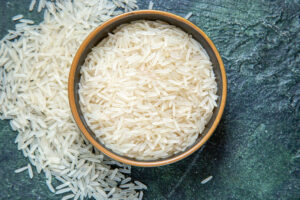
These are the extra-long grains seen in restaurant biryani. The chef probably used 1121 Basmati rice.
The grains are already quite long before cooking. They get longer after cooking. They remain separate during cooking and will look good on the plate if cooked properly.
This rice can be used for preparing biryani, pulao and other special meals.
1121 Basmati comes in different forms, such as Steam, White Sella and Golden Sella. They can differ in cooking time and texture.
2. Traditional Basmati Rice – Where Aroma Plays a Crucial Role
The aroma of freshly cooked traditional Basmati rice can be noticed straight from the pot.
This is a variety with a natural aroma. Its grains are generally shorter than those of 1121 Basmati rice, but that does not make it any less enjoyable.
Traditional Basmati pairs nicely with vegetable curries, dal and other home-cooked food. It can also be used for preparing jeera rice or pulao.
If you appreciate the aroma of rice as much as its taste, this one may be for you!
3. Golden Sella Basmati Rice – For Biryani in Large Quantities
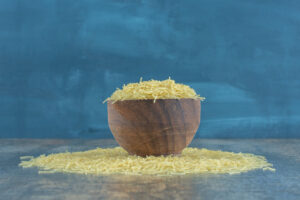
Suppose that you’re preparing biryani for a wedding function with hundreds of guests. The rice has to be one that does not turn into a paste while cooking.
Golden Sella can be used for this purpose.
The paddy is soaked, steamed and dried prior to the milling process. This process is called parboiling. It gives the rice its golden colour and firmness.
Golden Sella is a popular variety, often used in hotels and restaurants for biryani, mandi and other rice preparations.
The grains retain their shape well, but it is important not to overcook them.
4. Steam Basmati Rice – For a Softer Texture
Would you like your rice to be soft while you’re eating it? Steam Basmati might be to your liking.
The paddy is treated with steam during processing. It does not undergo the same parboiling treatment as Sella rice.
Steam Basmati is suitable for making regular meals, pulao and biryani.
When using it for the first time, be sure to check the water level. Excessive water or a longer cooking time could result in grains that are softer than desired.
5. White Sella Basmati Rice – Firm Rice with No Golden Colour
Though different in appearance, White Sella and Golden Sella are both parboiled rice.
White Sella is lighter in colour and has a firm texture. If cooked properly, the grains do not clump together and are less likely to break when handled.
It can be used for biryani, fried rice and dishes prepared in large quantities.
What to Check Before Purchasing Basmati Rice?
Don’t assume that a packet is worth buying simply because the grains look long in the picture. Let’s look at a couple of things first.
- Check grains for the same degree of size and less broken fragments.
- Be sure to verify the packing date and see that the packet is sealed.
- Don’t buy rice only labeled as Basmati – read the variety name.
- When ordering rice for restaurants or large functions, cook a little before placing an order.
Take a look at Diyan Rice Industries Pvt ltd and explore its rice products.
Final Thoughts
When it comes to Basmati rice, which type is best? 1121 or Golden Sella are options to try when preparing biryani. For those who enjoy the aroma of rice with their daily meals, try traditional Basmati. Other choices include Steam and White Sella.
When in doubt, try a small quantity of two varieties and prepare them separately. You may find that the rice you enjoy most isn’t necessarily the one with the longest grains.